Sydney Pet Rescue & Adoption, has launched the Animal Flood Victims Emergency Appeal, and together with various other rescue groups, they are working hard to raise funds to support animals affected by the recent devastating floods in Qld. The Wildlife Protection Association of Australia is one of the organisations they have chosen to support with the Appeal. We will be using the funds they raise to support foster carers in the worst affected and priority areas, with financial support to assist with the rescue and foster care of wildlife. ……….We thank SPRA and all the rescue groups who are working hard with them, for their support…..
Please click on this link to find out more about the appeal: SPRA Flood Animal Appeal Here!
Wednesday, January 19, 2011

Tuesday, January 18, 2011
Fraser Dingoes 18/1/11
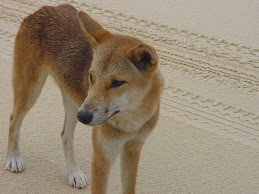
Dingoes
The dingo that attacked a Korean tourist on Fraser Island at the weekend will be killed if it can be identified. The incident early on Sunday morning saw the 41-year-old tourist bitten on the leg, hand and forearm by a dingo on 75 Mile Beach at Eurong. The woman and her friend had been surrounded by a pack of five dingoes when one lunged forward, attacking her. DERM's Regional Manager Ross Belcher said the behaviour of the dingo had posed a clear threat to the safety of visitors and the local community. “If the dingo is positively identified, it will have to be put down to protect public safety,” he said. “Through the introduction of the Dingo Management Strategy the number of dingoes having to be destroyed as a result of dangerous behaviour has decreased from as many as 14 in 2002 to five in 2010. “This incident serves as an ongoing reminder of the unpredictable and dangerous nature of dingoes on Fraser. They are wild animals and need to be treated as such.”
As rangers tried to identify the dingo yesterday politicians and wildlife lobby groups seized on the incident to attack DERM's current dingo management policy. State Member for Hervey Bay Ted Sorensen said Fraser Island was a major tourist attraction and people had the right to be safe from these attacks. “DERM's dingo strategy has never been peer-reviewed and problems identified by the island's visitors and residents have simply been ignored,” he said. Malcom Kilpatrick from Save Fraser Island Dingoes said the bottom line was that the management strategy “had some good points, but it did have problems and they needed to be fixed now”. “If it was the alpha male leader of the pack that attacked the tourist and it is chased down and shot you can just about say goodbye to the other members of the pack because they won't survive without their leader. “That means five dingoes may die because of this one incident and that is a tragedy,” Mr Kilpatrick said. *Fraser Coast Chronicle
The dingo that attacked a Korean tourist on Fraser Island at the weekend will be killed if it can be identified. The incident early on Sunday morning saw the 41-year-old tourist bitten on the leg, hand and forearm by a dingo on 75 Mile Beach at Eurong. The woman and her friend had been surrounded by a pack of five dingoes when one lunged forward, attacking her. DERM's Regional Manager Ross Belcher said the behaviour of the dingo had posed a clear threat to the safety of visitors and the local community. “If the dingo is positively identified, it will have to be put down to protect public safety,” he said. “Through the introduction of the Dingo Management Strategy the number of dingoes having to be destroyed as a result of dangerous behaviour has decreased from as many as 14 in 2002 to five in 2010. “This incident serves as an ongoing reminder of the unpredictable and dangerous nature of dingoes on Fraser. They are wild animals and need to be treated as such.”
As rangers tried to identify the dingo yesterday politicians and wildlife lobby groups seized on the incident to attack DERM's current dingo management policy. State Member for Hervey Bay Ted Sorensen said Fraser Island was a major tourist attraction and people had the right to be safe from these attacks. “DERM's dingo strategy has never been peer-reviewed and problems identified by the island's visitors and residents have simply been ignored,” he said. Malcom Kilpatrick from Save Fraser Island Dingoes said the bottom line was that the management strategy “had some good points, but it did have problems and they needed to be fixed now”. “If it was the alpha male leader of the pack that attacked the tourist and it is chased down and shot you can just about say goodbye to the other members of the pack because they won't survive without their leader. “That means five dingoes may die because of this one incident and that is a tragedy,” Mr Kilpatrick said. *Fraser Coast Chronicle
Friday, January 7, 2011
Fraser Dingoes and Jennifer Parkhurst, 8/1/11
SMH Report
The wildlife photographer Jennifer Parkhurst fell foul of the law trying to protect the island's harried inhabitants, writes Frank Robson.
Jennifer Parkhurst's war with the custodians of Fraser Island's dingoes began when she saw rangers setting traps for the harried animals atop a sand dune. It was 2003, two years after a nine-year-old boy had died in a dingo attack, and the traps were part of the Queensland government's radical crackdown on human-dingo interaction within the world-renowned national park.
Parkhurst, a wildlife photographer, approached the rangers and asked to see the traps. They were the usual cruel-looking devices, but the rangers assured her that a covering of rubber on the jaws meant the dingoes would not be hurt. Once trapped, they would be ear-tagged for identification and then released.
"So I said, 'OK, if they don't hurt, let's pop your arm in one and trigger it,'" Parkhurst says. "But they didn't go for that idea. After that, relations between me and DERM [Queensland's Department of Environment and Resource Management] got steadily worse."
Advertisement: Story continues below Over ensuing years, rangers killed scores of "problem" dingoes and fenced off the island's residential communities and campsites to isolate the animals from humans. Signs were erected and brochures depicting dingoes as fearsome, toothy killers liable to attack at any moment were distributed, with a warning that anyone feeding them would be ordered off the island and fined up to $3000.
Cut off from their human food sources - rubbish tips, camp bins and the island residents who had fed them scraps for decades - and with their natural habitat under siege by up to 350,000 tourists a year, Fraser's native dogs, one of the purest dingo strains left in Australia, became desperate victims of Queensland's bizarre tourism-native species juggling act.
Snapshots by island residents show emaciated dingoes standing plaintively outside the communities' electrified cattle grids or dragging legs injured by the department's "harmless" traps or being "hazed" (shot at by rangers with slingshots and pellets) away from carloads of excitable backpackers. In some cases, autopsies of those killed by rangers revealed nothing in their stomachs but sand or plastic waste or grass.
"To see these beautiful animals in that condition broke my heart," Parkhurst says. "The Queensland Parks and Wildlife Service [a department agency] estimates there are more than 200 dingoes on the island, but even allowing for seasonal breeding variations I think there are a lot less than that."
For years, Parkhurst, 43, travelled daily from her home at Rainbow Beach to photograph one of the island's 10 dingo packs at Hook Point, on Fraser's southern tip.
Increasingly at odds with the rangers, who suspected her of illegally feeding the pack, she was woken early on August 25, 2009, by five department officials and a policeman, who had a warrant to search her home.
Six hours later, they left, taking all her computer files about dingoes, including a book she was writing, 90 department dingo autopsy reports she had obtained through freedom-of-information searches, and her spirited analysis of the department's dingo management stuff-ups. They took her still and video footage of dingoes, her journals, field notes and even photos of "K9", her pet dog of 16 years which died not long before the raid. (Most of the material has yet to be returned.)
On November 3 last year, Parkhurst appeared in Maryborough Magistrates Court and pleaded guilty to 46 charges related to feeding and "disturbing" dingoes in the Great Sandy National Park (Fraser Island) between July 2008 and August 2009.
Pleading not guilty wasn't an option: among the videos seized was footage of her feeding members of the Hook Point dingo pack and celebrating Christmas Day 2008, with the pack and her now former boyfriend. Parkhurst is heard to say: "Three roast chickens … disappeared in seconds, but gee whiz, they loved it."
(The videos seized also contained footage shot by Parkhurst of a veteran ranger, Les Gallehawk, feeding dingoes a bucket of fish at the same location. Gallehawk was sacked and fined $300 for his action last year. "I'm not allowed to say anything about it," he said from his home. "I had to sign an agreement after I got sacked.")
She was fined $40,000 and received a nine-month jail term, suspended for three years. The magistrate, John Smith, referred to the "deliberate nature" of Parkhurst's offending, saying she had engaged in a covert campaign over a long period and had sought to hide her offending from rangers.
At her home, Parkhurst told the Herald she had been made a scapegoat for the department's flawed management of Fraser Island. She believes the harshness of her sentence was linked to her role as an activist against the government's treatment of island dingoes. "I have to take responsibility for what I did," she adds, "but I don't accept that feeding starving animals makes them dangerous. I believe if everyone was feeding them - as residents and rangers used to - they would be less of a risk to visitors, not more."
Before her court appearance, rangers killed five of the juvenile dingoes Parkhurst had fed and given names to, claiming they had become habituated and had "attacked" humans. "My actions put the spotlight on that pack, and that's what got them killed. That's what I'm remorseful about … yet I hope people can understand how horrific it was watching those animals starving. It's such a slow, cruel, horrible process."
Sydney Morning Herald 8/1/11
The wildlife photographer Jennifer Parkhurst fell foul of the law trying to protect the island's harried inhabitants, writes Frank Robson.
Jennifer Parkhurst's war with the custodians of Fraser Island's dingoes began when she saw rangers setting traps for the harried animals atop a sand dune. It was 2003, two years after a nine-year-old boy had died in a dingo attack, and the traps were part of the Queensland government's radical crackdown on human-dingo interaction within the world-renowned national park.
Parkhurst, a wildlife photographer, approached the rangers and asked to see the traps. They were the usual cruel-looking devices, but the rangers assured her that a covering of rubber on the jaws meant the dingoes would not be hurt. Once trapped, they would be ear-tagged for identification and then released.
"So I said, 'OK, if they don't hurt, let's pop your arm in one and trigger it,'" Parkhurst says. "But they didn't go for that idea. After that, relations between me and DERM [Queensland's Department of Environment and Resource Management] got steadily worse."
Advertisement: Story continues below Over ensuing years, rangers killed scores of "problem" dingoes and fenced off the island's residential communities and campsites to isolate the animals from humans. Signs were erected and brochures depicting dingoes as fearsome, toothy killers liable to attack at any moment were distributed, with a warning that anyone feeding them would be ordered off the island and fined up to $3000.
Cut off from their human food sources - rubbish tips, camp bins and the island residents who had fed them scraps for decades - and with their natural habitat under siege by up to 350,000 tourists a year, Fraser's native dogs, one of the purest dingo strains left in Australia, became desperate victims of Queensland's bizarre tourism-native species juggling act.
Snapshots by island residents show emaciated dingoes standing plaintively outside the communities' electrified cattle grids or dragging legs injured by the department's "harmless" traps or being "hazed" (shot at by rangers with slingshots and pellets) away from carloads of excitable backpackers. In some cases, autopsies of those killed by rangers revealed nothing in their stomachs but sand or plastic waste or grass.
"To see these beautiful animals in that condition broke my heart," Parkhurst says. "The Queensland Parks and Wildlife Service [a department agency] estimates there are more than 200 dingoes on the island, but even allowing for seasonal breeding variations I think there are a lot less than that."
For years, Parkhurst, 43, travelled daily from her home at Rainbow Beach to photograph one of the island's 10 dingo packs at Hook Point, on Fraser's southern tip.
Increasingly at odds with the rangers, who suspected her of illegally feeding the pack, she was woken early on August 25, 2009, by five department officials and a policeman, who had a warrant to search her home.
Six hours later, they left, taking all her computer files about dingoes, including a book she was writing, 90 department dingo autopsy reports she had obtained through freedom-of-information searches, and her spirited analysis of the department's dingo management stuff-ups. They took her still and video footage of dingoes, her journals, field notes and even photos of "K9", her pet dog of 16 years which died not long before the raid. (Most of the material has yet to be returned.)
On November 3 last year, Parkhurst appeared in Maryborough Magistrates Court and pleaded guilty to 46 charges related to feeding and "disturbing" dingoes in the Great Sandy National Park (Fraser Island) between July 2008 and August 2009.
Pleading not guilty wasn't an option: among the videos seized was footage of her feeding members of the Hook Point dingo pack and celebrating Christmas Day 2008, with the pack and her now former boyfriend. Parkhurst is heard to say: "Three roast chickens … disappeared in seconds, but gee whiz, they loved it."
(The videos seized also contained footage shot by Parkhurst of a veteran ranger, Les Gallehawk, feeding dingoes a bucket of fish at the same location. Gallehawk was sacked and fined $300 for his action last year. "I'm not allowed to say anything about it," he said from his home. "I had to sign an agreement after I got sacked.")
She was fined $40,000 and received a nine-month jail term, suspended for three years. The magistrate, John Smith, referred to the "deliberate nature" of Parkhurst's offending, saying she had engaged in a covert campaign over a long period and had sought to hide her offending from rangers.
At her home, Parkhurst told the Herald she had been made a scapegoat for the department's flawed management of Fraser Island. She believes the harshness of her sentence was linked to her role as an activist against the government's treatment of island dingoes. "I have to take responsibility for what I did," she adds, "but I don't accept that feeding starving animals makes them dangerous. I believe if everyone was feeding them - as residents and rangers used to - they would be less of a risk to visitors, not more."
Before her court appearance, rangers killed five of the juvenile dingoes Parkhurst had fed and given names to, claiming they had become habituated and had "attacked" humans. "My actions put the spotlight on that pack, and that's what got them killed. That's what I'm remorseful about … yet I hope people can understand how horrific it was watching those animals starving. It's such a slow, cruel, horrible process."
Sydney Morning Herald 8/1/11
Fraser Dingoes, 8/1/11
AMONG Fraser Island's 100 or so permanent residents, stories vary about the circumstances leading to the killing of a nine-year-old Brisbane boy, Clinton Gage, by two dingoes near Waddy Point, on the island's northern tip, on April 30, 2001.
Some say Clinton and his younger brother Dylan (who was bitten but survived) were seen by other campers taunting and throwing things at the animals; others believe an earlier severe bushfire wiped out food sources and created a "dangerous mood" among two near-starving dingo packs competing for scraps in the area where Clinton was killed.
Whatever the cause, the tragedy was the catalyst for all that followed. According to a dingo researcher, Dr Ian Gunn, the state government's harsh treatment of the island's dwindling dog packs has brought them to the edge of extinction.
Advertisement: Story continues below "The detailed studies and records collected by Jennifer Parkhurst have exposed the dingoes' plight," the Monash University vet, who heads the National Dingo Preservation and Recovery Program, said.
"Things like starvation, poor survival of pups, inhumane treatment of dogs through tagging and culling methods, and hassling by visitors must be addressed immediately to save these animals from impending extinction."
The Queensland Department of Environmental Resource Management does not accept the dingoes are starving. Its website says they have enough natural food sources, but are "naturally lean" and subject to seasonal and pack-status weight variations.
To support this, the site displays four photographs of what it says is the same female juvenile - identified by its ear tag as "purple/yellow/yellow"- observed over 11 months. In the first photo the dingo appears to be starving; the others show a dated progression as it "regained weight quickly".
But a Fraser Island resident, Judi Daniel, says the department item shows three different dingoes.
"It's a complete concoction," the retired journalist said at her home in the village of Eurong. "I took the first photo of the starving female, which died soon afterwards in a fight with other dingoes, and it ended up on various websites.
''Without my permission, DERM hooked it off the net and used it as part of its propaganda beat-up."
Daniel said the next two photos in the department series did show the "purple/yellow/yellow" dingo, but the last photo was another ring-in with a different-coloured ear tag.
Terry Harper, the general manager of the Queensland Parks and Wildlife Service, admitted the first photo in the series was taken by Daniel, but insisted only one dingo is shown: "Although it lost its ear tag [at some stage] … all the photos are of the same animal."
Daniel says rumours persist that rangers are under instruction to secretly feed dingoes to avoid bad publicity over them starving.
"The crazy thing about all this is that dingoes are very social animals,'' she said. ''They were camp dogs with the island's Aborigines for thousands of years, and they actually like people.
''Then, suddenly, they're tagged, demonised, brutalised and confronted daily by tourists who shriek and scream at the sight of them. And they just don't understand why." Sydney Morning Herald, Jan 8. 2011
Some say Clinton and his younger brother Dylan (who was bitten but survived) were seen by other campers taunting and throwing things at the animals; others believe an earlier severe bushfire wiped out food sources and created a "dangerous mood" among two near-starving dingo packs competing for scraps in the area where Clinton was killed.
Whatever the cause, the tragedy was the catalyst for all that followed. According to a dingo researcher, Dr Ian Gunn, the state government's harsh treatment of the island's dwindling dog packs has brought them to the edge of extinction.
Advertisement: Story continues below "The detailed studies and records collected by Jennifer Parkhurst have exposed the dingoes' plight," the Monash University vet, who heads the National Dingo Preservation and Recovery Program, said.
"Things like starvation, poor survival of pups, inhumane treatment of dogs through tagging and culling methods, and hassling by visitors must be addressed immediately to save these animals from impending extinction."
The Queensland Department of Environmental Resource Management does not accept the dingoes are starving. Its website says they have enough natural food sources, but are "naturally lean" and subject to seasonal and pack-status weight variations.
To support this, the site displays four photographs of what it says is the same female juvenile - identified by its ear tag as "purple/yellow/yellow"- observed over 11 months. In the first photo the dingo appears to be starving; the others show a dated progression as it "regained weight quickly".
But a Fraser Island resident, Judi Daniel, says the department item shows three different dingoes.
"It's a complete concoction," the retired journalist said at her home in the village of Eurong. "I took the first photo of the starving female, which died soon afterwards in a fight with other dingoes, and it ended up on various websites.
''Without my permission, DERM hooked it off the net and used it as part of its propaganda beat-up."
Daniel said the next two photos in the department series did show the "purple/yellow/yellow" dingo, but the last photo was another ring-in with a different-coloured ear tag.
Terry Harper, the general manager of the Queensland Parks and Wildlife Service, admitted the first photo in the series was taken by Daniel, but insisted only one dingo is shown: "Although it lost its ear tag [at some stage] … all the photos are of the same animal."
Daniel says rumours persist that rangers are under instruction to secretly feed dingoes to avoid bad publicity over them starving.
"The crazy thing about all this is that dingoes are very social animals,'' she said. ''They were camp dogs with the island's Aborigines for thousands of years, and they actually like people.
''Then, suddenly, they're tagged, demonised, brutalised and confronted daily by tourists who shriek and scream at the sight of them. And they just don't understand why." Sydney Morning Herald, Jan 8. 2011
Tuesday, December 14, 2010
SFID MEDIA RELEASE: DINGO DAY/ART FOR EARTH 15/12/10
SFID MEDIA RELEASE: DINGO DAY/ART FOR EARTH
Once again the community has come to support the outreach work of Save Fraser Island Dingoes (SFID), and this time for the second annual Dingo Day at Hervey Bay.
This year, it was not just SFID that wanted to give a voice to the voiceless, but also world-famous Art-For-Earth candle-artist, Jorje Pujol.
Despite the setback of a delay due to weather, the actual event coincided with an almost miraculously sunny day.
The generosity of the HB business community and of Jorje’s hard-working team allowed what would otherwise have cost approx $16,000, to go ahead at half that cost due to donations of time, money, and equipment.
Due to rescheduling, numbers were down on the thousand plus that attended last year’s Dingo Day, but SFID and Jorje were not deterred. 9 marquees donated by local businesses were set up at Dayman Park along with a semi-trailer which was used as a performance stage, and cherry picker was used as a viewing and photography platform for those who attended. This was operated all day by Ron Corfield. The view from up there was spectacular.
The cherry picker also provided an aerial platform for a spectacular, crowd-stopping rendition of didgeridoo playing by Hayden Richards and Travis Page.
Pulses quickened as we all tried to get paper-bags filled with sand in preparation for placement of the candles.
The day also saw the launch of the long-awaited dingo book: Vanishing Icon: The Fraser Island Dingo by Jennifer Parkhurst. Jen was kept busy all day signing personalized copies and most stock sold out.
Jorje also arranged for Jen and the crew from Aus Story to be taken into the air by Hervey Bay Skydivers to personally photograph the effigy of the dingo as it took shape.
The Butchulla people once again showed their support for the cause by presenting a ‘welcome to country’ followed by indigenous story-telling and dance. The crowd of onlookers was invited to get up and dance and eagerly did so.
Ray Revill from Tess wildlife sanctuary and a large group of volunteers held an informative and interesting stand which incorporated live snakes, recued birds and a joey which they are currently caring for. Ray also managed to rescue a panting xxx hawk that was stuck in the fronds of a palm tree in the heat of the day.
The Nefertiti Dancers and the Fraser Coast Tae kwon Do club gave interesting performances.
Ted Sorensen and his PA’s Paula and Michael and some of their friends made a huge effort to help fill the sand bags and place them on the outline. SFID would like to thank Ted and staff for always attending our functions and showing their support. We would also like to thank Glen Elmes for his support throughout the past year, and welcome Mr Jack Dempsey as the new Shadow Minister for Climate Change and Sustainability.
Malcolm Kilpatrick as Master of Ceremonies did an amazing job as usual.
The climax of the day began with a fire lighting ceremony during which the youngest member of the Butchulla representatives, 7 year old Dyneale, passed a flame to Jennifer Parkhurst as a living metaphor of the Butchulla people’s respect for Jen’s efforts to preserve and protect their native dog.
A helicopter hovered above to capture the moment as three sky divers were launched from a plane, and landed perfectly in the centre of the effigy. All eyes were fixed to the divers as they landed… and cheers, applause, and sighs of wonderment were heard all around.
The crowd was then invited to light their own candles from Jen’s flame, and thus the candles on the ground in the outline of the dingo were lit by the enthusiastic crowd.
Tears of pleasure and emotion fell with the setting sun as the dingo came to life.
Professional photographer Grant Conlon took beautiful still photos from the helicopter until the light was too dim to continue.
The cherry picker was operated by Ron non-stop as people from the crowd gathered to take their turn at viewing the image from the elevated vantage point. At that height, the dingoes seemed to come to light in flickering glory. The moon rose and a colony of bats flew overhead, creating the perfect backdrop to the haunting scene.
All in all it was an extremely successful event, and will be viewed by an expected audience of thousands world wide once Jorje adds it to his you-tube site (Art For Earth). We express our heartfelt thanks to Jorje Pujol for working so hard and tirelessly over the past three months to make this a reality.
SFID would like to thank all of our supporters and sponsors, some of whom are named below.
The planning, fund-raising, advertising and implementation of this event was once again accomplished by the hard work of the volunteers of SFID.
Thank you also to the media which has supported the event, including SOS news, Channel 7, Win TV, Australian Story, Fraser Coast Radio FM, Hervey Bay Independent, Gympie Times, Noosa Journal, Fraser Coast Chronicle, AAP.
Last but not least we are grateful for the support of Bob and Judy Irwin, and the late Malcolm Douglas whose last piece of footage, made for us, was an encouragement to keep up the fight
We would also like to extend our thanks to Inkworks, Turning Point Technologies, Hervey Bay Wholesalers, David’s Ultra Music, Express Bookkeeping, Bay Central IGA, Deb Wittman and the K’Gari Dancers, Peter Scopelitis, Nefertiti Dancers, Tae Kwon Do School & M&K Wide Bay Electronics.
semi-trailer donated by Richer’s Transport
cherry picker donated by Maryborough Crane Hire
Sand was donated by Byrne Brothers, and many people ‘sponsored’ paper bags and candles, including the Wildlife Warriors from Australia Zoo and Paulette Oldfield from Suncorp.
Sea Bird Aviation
Hervey Bay Skydivers
Fuel was donated by Ron Corfield
MI Helicopters
Marquees donated by channel 7, Wide Bay Water, Hervey Bay RSL
Cheryl McCullum from Bundy $500
SFID Committee and members who arrived on site at 6am, and stayed till well after 9.30 pm cleaning and packing up.
Once again the community has come to support the outreach work of Save Fraser Island Dingoes (SFID), and this time for the second annual Dingo Day at Hervey Bay.
This year, it was not just SFID that wanted to give a voice to the voiceless, but also world-famous Art-For-Earth candle-artist, Jorje Pujol.
Despite the setback of a delay due to weather, the actual event coincided with an almost miraculously sunny day.
The generosity of the HB business community and of Jorje’s hard-working team allowed what would otherwise have cost approx $16,000, to go ahead at half that cost due to donations of time, money, and equipment.
Due to rescheduling, numbers were down on the thousand plus that attended last year’s Dingo Day, but SFID and Jorje were not deterred. 9 marquees donated by local businesses were set up at Dayman Park along with a semi-trailer which was used as a performance stage, and cherry picker was used as a viewing and photography platform for those who attended. This was operated all day by Ron Corfield. The view from up there was spectacular.
The cherry picker also provided an aerial platform for a spectacular, crowd-stopping rendition of didgeridoo playing by Hayden Richards and Travis Page.
Pulses quickened as we all tried to get paper-bags filled with sand in preparation for placement of the candles.
The day also saw the launch of the long-awaited dingo book: Vanishing Icon: The Fraser Island Dingo by Jennifer Parkhurst. Jen was kept busy all day signing personalized copies and most stock sold out.
Jorje also arranged for Jen and the crew from Aus Story to be taken into the air by Hervey Bay Skydivers to personally photograph the effigy of the dingo as it took shape.
The Butchulla people once again showed their support for the cause by presenting a ‘welcome to country’ followed by indigenous story-telling and dance. The crowd of onlookers was invited to get up and dance and eagerly did so.
Ray Revill from Tess wildlife sanctuary and a large group of volunteers held an informative and interesting stand which incorporated live snakes, recued birds and a joey which they are currently caring for. Ray also managed to rescue a panting xxx hawk that was stuck in the fronds of a palm tree in the heat of the day.
The Nefertiti Dancers and the Fraser Coast Tae kwon Do club gave interesting performances.
Ted Sorensen and his PA’s Paula and Michael and some of their friends made a huge effort to help fill the sand bags and place them on the outline. SFID would like to thank Ted and staff for always attending our functions and showing their support. We would also like to thank Glen Elmes for his support throughout the past year, and welcome Mr Jack Dempsey as the new Shadow Minister for Climate Change and Sustainability.
Malcolm Kilpatrick as Master of Ceremonies did an amazing job as usual.
The climax of the day began with a fire lighting ceremony during which the youngest member of the Butchulla representatives, 7 year old Dyneale, passed a flame to Jennifer Parkhurst as a living metaphor of the Butchulla people’s respect for Jen’s efforts to preserve and protect their native dog.
A helicopter hovered above to capture the moment as three sky divers were launched from a plane, and landed perfectly in the centre of the effigy. All eyes were fixed to the divers as they landed… and cheers, applause, and sighs of wonderment were heard all around.
The crowd was then invited to light their own candles from Jen’s flame, and thus the candles on the ground in the outline of the dingo were lit by the enthusiastic crowd.
Tears of pleasure and emotion fell with the setting sun as the dingo came to life.
Professional photographer Grant Conlon took beautiful still photos from the helicopter until the light was too dim to continue.
The cherry picker was operated by Ron non-stop as people from the crowd gathered to take their turn at viewing the image from the elevated vantage point. At that height, the dingoes seemed to come to light in flickering glory. The moon rose and a colony of bats flew overhead, creating the perfect backdrop to the haunting scene.
All in all it was an extremely successful event, and will be viewed by an expected audience of thousands world wide once Jorje adds it to his you-tube site (Art For Earth). We express our heartfelt thanks to Jorje Pujol for working so hard and tirelessly over the past three months to make this a reality.
SFID would like to thank all of our supporters and sponsors, some of whom are named below.
The planning, fund-raising, advertising and implementation of this event was once again accomplished by the hard work of the volunteers of SFID.
Thank you also to the media which has supported the event, including SOS news, Channel 7, Win TV, Australian Story, Fraser Coast Radio FM, Hervey Bay Independent, Gympie Times, Noosa Journal, Fraser Coast Chronicle, AAP.
Last but not least we are grateful for the support of Bob and Judy Irwin, and the late Malcolm Douglas whose last piece of footage, made for us, was an encouragement to keep up the fight
We would also like to extend our thanks to Inkworks, Turning Point Technologies, Hervey Bay Wholesalers, David’s Ultra Music, Express Bookkeeping, Bay Central IGA, Deb Wittman and the K’Gari Dancers, Peter Scopelitis, Nefertiti Dancers, Tae Kwon Do School & M&K Wide Bay Electronics.
semi-trailer donated by Richer’s Transport
cherry picker donated by Maryborough Crane Hire
Sand was donated by Byrne Brothers, and many people ‘sponsored’ paper bags and candles, including the Wildlife Warriors from Australia Zoo and Paulette Oldfield from Suncorp.
Sea Bird Aviation
Hervey Bay Skydivers
Fuel was donated by Ron Corfield
MI Helicopters
Marquees donated by channel 7, Wide Bay Water, Hervey Bay RSL
Cheryl McCullum from Bundy $500
SFID Committee and members who arrived on site at 6am, and stayed till well after 9.30 pm cleaning and packing up.
Monday, December 6, 2010
Fraser Island Dingoes 7/12/10
Fraser Dingoes
The Hervey Bay Dingo Day planned for last Sunday had to be postponed until this Saturday the 11th of December because of the weather. The Dingo Day will at Dayman Park, Hervey Bay, and features the World famous candle art, entertainment, sausage sizzle, skydivers, indigenous dancers and singers, raffles, alltogether a really spectacular day to help the Fraser Island dingoes. *
The Hervey Bay Dingo Day planned for last Sunday had to be postponed until this Saturday the 11th of December because of the weather. The Dingo Day will at Dayman Park, Hervey Bay, and features the World famous candle art, entertainment, sausage sizzle, skydivers, indigenous dancers and singers, raffles, alltogether a really spectacular day to help the Fraser Island dingoes. *
Monday, November 22, 2010
Dingoes 23/11/10
Dingo Media Release
Dingo CARE Network Inc urges both parties to stop playing political football with the environment Date 19 November 2010 Dingo CARE Network Inc (Incorporated under the Associations Incorporation Act 1981 on 21 June 2004 No A0045881H) Dingo CARE Network Inc. today expressed disappointment that both the Labour Party and the Coalition have promised a resumption of aerial wild dog/dingo baiting in the run up to the Victorian State Election. Julie Fechner, President of Dingo CARE Network Inc, today said: “It seems that both parties are ignoring the science in an attempt to increase their rural vote. Research has shown that aerial baiting has not been effective in the past so why do politicians continue with the same old practices, and why would farmers want scarce resources wasted on management practices that have been shown to be ineffective? Not only is it unscientific, but may be damaging to the natural environment.”
“Research is has shown that baiting weakens dingo pack structure, which exacerbates the problem of roaming dingoes and wild dogs. When the dominant or alpha pair is killed, remaining pack members often become poor hunters and breed at a higher rate. This is similar to removing the parents from the family farm and leaving young teenagers in charge to behave irresponsibly.” “When dingo packs are left intact, the overall dingo population is self-regulating at a relatively low level and they tend to stay within their home territory. They also play an important role as the top order predator maintaining environmental balance, protecting many of our small endangered species, and keeping kangaroo numbers in check.”
“If the Victorian government is serious about developing a sustainable solution for wild-dog predation on farm stock, it should promote and finance non-lethal control methods, including the use of lamas and maremma dogs. Such alternatives are now being used successfully in Queensland to protect stock.” “The dingo is now protected wildlife under the Victorian Wildlife Act. We trust that these announcements by the major political parties have been made in full consideration of the new laws protecting the dingo, and there are no plans to bait outside the agreed 3 kilometre buffer zone between public and private land.” Further information: Julie Fechner: 0419 55 2226 julie@dingo.id.au Ernest Healy 03 99020752 ernest.healy@arts.monash.edu.au
Another Dingo Media Release
The National Dingo Preservation and Recovery Program today expressed disappointment at the Victorian Labor government’s decision to resume aerial baiting for wild dogs in north-east Victoria and Gippsland. Yesterday, The Victorian Minister for Agriculture, Joe Helper, announced a budget of $1.2 million for the resumption of aerial baiting of wild dogs. NDPRP President, Dr Ian Gunn, today stated that the resumption of aerial baiting would likely prove counter productive in controlling wild-dog numbers and be a significant waste of public finances. ‘Aerial baiting trials have been conducted before in Victoria and found to be largely ineffective. It is concerning that it has been resurrected as part of an election campaign.’ Dr Gunn encouraged the Victorian government to take seriously the body of expert opinion that suggests that indiscriminant baiting and trapping of wild dogs and dingoes may be in fact exacerbating the very problem that farmers wish to overcome.
‘Recent research has concluded that the lethal control of dingo populations destabilizes pack structures, which can lead to increased breeding rates. In a stable pack, or family unit, only the dominant female usually breeds, limiting the wild-dog or dingo population. If a dominant female or male is killed through baiting or trapping, then subordinate females are free to breed, producing more pups than usual. Pups which result from fractured packs are less likely to be territorially constrained and may not be taught to hunt properly. Such ‘poorly-educated’ juvenile dingoes are more likely to resort to easy prey, such as sheep on farmland. Many farmers have been mystified as to why wild-dog numbers have been increasing despite increased levels of poisoning and trapping. This is why.’
While Dr Gunn applauded the Victorian government’s recent listing the dingo as threatened wildlife, he called upon the Minister for Agriculture to encourage farmers to adopt non-lethal methods of wild dog control, rather than an escalation of poisoning. ‘In the past, the breaking up of pack structures has also facilitated the hybridisation of dingoes with domestic dogs. New approaches to farm stock protection need to be adopted, rather than simply persisting with very expensive control methods that simply don’t work in the longer term.’Dr Gunn called upon the Victorian government to allocate a budget equivalent to that announced for aerial baiting to dingo conservation for the coming three year period. Contacts: Dr Ian Gunn BVSc. FACVSc. 0427 387778 (mob.) Dr Ernest Healy 03 9902 0752(w) 03 9 3065037 (h)
Dingo CARE Network Inc urges both parties to stop playing political football with the environment Date 19 November 2010 Dingo CARE Network Inc (Incorporated under the Associations Incorporation Act 1981 on 21 June 2004 No A0045881H) Dingo CARE Network Inc. today expressed disappointment that both the Labour Party and the Coalition have promised a resumption of aerial wild dog/dingo baiting in the run up to the Victorian State Election. Julie Fechner, President of Dingo CARE Network Inc, today said: “It seems that both parties are ignoring the science in an attempt to increase their rural vote. Research has shown that aerial baiting has not been effective in the past so why do politicians continue with the same old practices, and why would farmers want scarce resources wasted on management practices that have been shown to be ineffective? Not only is it unscientific, but may be damaging to the natural environment.”
“Research is has shown that baiting weakens dingo pack structure, which exacerbates the problem of roaming dingoes and wild dogs. When the dominant or alpha pair is killed, remaining pack members often become poor hunters and breed at a higher rate. This is similar to removing the parents from the family farm and leaving young teenagers in charge to behave irresponsibly.” “When dingo packs are left intact, the overall dingo population is self-regulating at a relatively low level and they tend to stay within their home territory. They also play an important role as the top order predator maintaining environmental balance, protecting many of our small endangered species, and keeping kangaroo numbers in check.”
“If the Victorian government is serious about developing a sustainable solution for wild-dog predation on farm stock, it should promote and finance non-lethal control methods, including the use of lamas and maremma dogs. Such alternatives are now being used successfully in Queensland to protect stock.” “The dingo is now protected wildlife under the Victorian Wildlife Act. We trust that these announcements by the major political parties have been made in full consideration of the new laws protecting the dingo, and there are no plans to bait outside the agreed 3 kilometre buffer zone between public and private land.” Further information: Julie Fechner: 0419 55 2226 julie@dingo.id.au Ernest Healy 03 99020752 ernest.healy@arts.monash.edu.au
Another Dingo Media Release
The National Dingo Preservation and Recovery Program today expressed disappointment at the Victorian Labor government’s decision to resume aerial baiting for wild dogs in north-east Victoria and Gippsland. Yesterday, The Victorian Minister for Agriculture, Joe Helper, announced a budget of $1.2 million for the resumption of aerial baiting of wild dogs. NDPRP President, Dr Ian Gunn, today stated that the resumption of aerial baiting would likely prove counter productive in controlling wild-dog numbers and be a significant waste of public finances. ‘Aerial baiting trials have been conducted before in Victoria and found to be largely ineffective. It is concerning that it has been resurrected as part of an election campaign.’ Dr Gunn encouraged the Victorian government to take seriously the body of expert opinion that suggests that indiscriminant baiting and trapping of wild dogs and dingoes may be in fact exacerbating the very problem that farmers wish to overcome.
‘Recent research has concluded that the lethal control of dingo populations destabilizes pack structures, which can lead to increased breeding rates. In a stable pack, or family unit, only the dominant female usually breeds, limiting the wild-dog or dingo population. If a dominant female or male is killed through baiting or trapping, then subordinate females are free to breed, producing more pups than usual. Pups which result from fractured packs are less likely to be territorially constrained and may not be taught to hunt properly. Such ‘poorly-educated’ juvenile dingoes are more likely to resort to easy prey, such as sheep on farmland. Many farmers have been mystified as to why wild-dog numbers have been increasing despite increased levels of poisoning and trapping. This is why.’
While Dr Gunn applauded the Victorian government’s recent listing the dingo as threatened wildlife, he called upon the Minister for Agriculture to encourage farmers to adopt non-lethal methods of wild dog control, rather than an escalation of poisoning. ‘In the past, the breaking up of pack structures has also facilitated the hybridisation of dingoes with domestic dogs. New approaches to farm stock protection need to be adopted, rather than simply persisting with very expensive control methods that simply don’t work in the longer term.’Dr Gunn called upon the Victorian government to allocate a budget equivalent to that announced for aerial baiting to dingo conservation for the coming three year period. Contacts: Dr Ian Gunn BVSc. FACVSc. 0427 387778 (mob.) Dr Ernest Healy 03 9902 0752(w) 03 9 3065037 (h)
Subscribe to:
Posts (Atom)